
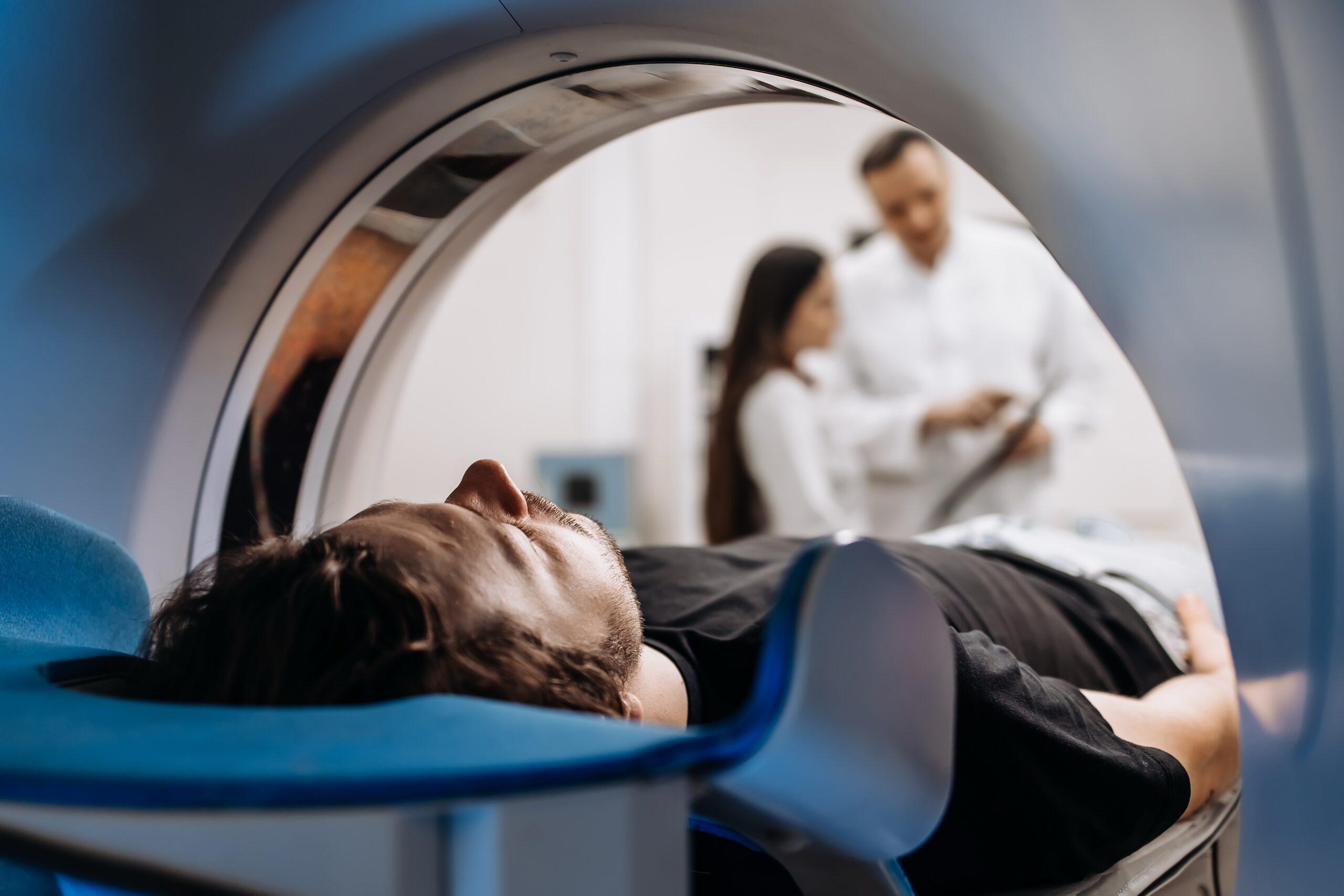
Your doctor just ordered an MRI. Now what? Whether this is your first scan or your fifth, knowing what to expect and how to choose the right imaging center in Jersey City can make the entire experience smoother, faster, and far less stressful.
This guide covers everything Hudson County patients need to know: how to prepare, what happens during the scan, how long it takes, and what to look for when comparing Jersey City MRI centers.
What Is an MRI and Why Does It Matter?
MRI stands for Magnetic Resonance Imaging. Unlike X-rays or CT scans, an MRI does not use ionizing radiation. Instead, it uses a powerful magnetic field and radio waves to create detailed, three-dimensional pictures of your body’s internal structures, soft tissues, organs, joints, nerves, and more.
This makes MRI the preferred diagnostic tool for conditions that other imaging tests can miss. Doctors across Jersey City and Hudson County routinely order MRI scans to investigate:
- Brain and neurological symptoms (headaches, dizziness, numbness)
- Joint injuries such as torn ligaments, cartilage damage, and rotator cuff tears
- Spinal conditions including herniated discs and nerve compression
- Abdominal and pelvic concerns, including organ abnormalities
- Soft tissue tumors, infections, and inflammation
Key advantage: Because MRI does not use radiation, it is generally safe for repeated use and is considered one of the safest diagnostic imaging modalities available today.
How to Prepare for Your MRI in Jersey City
Good preparation is the single most important thing you can do to ensure your MRI goes smoothly and produces clear, accurate images. Here is a step-by-step breakdown.
1–2 Weeks Before Your Scan
- Confirm your appointment and ask your imaging center if you need a referral or prior authorization from your insurance.
- Tell your doctor and the imaging center about any implants, medical devices, or surgeries. This includes pacemakers, cochlear implants, joint replacements, surgical clips, and neurostimulators. Some implants are MRI-incompatible, and the center needs time to verify yours.
- Mention any tattoos some older tattoo inks contain metallic particles that can cause discomfort during scanning.
- If you have claustrophobia or anxiety about enclosed spaces, speak with your doctor now. Options include requesting a wide-bore MRI, mild sedation, or practicing relaxation techniques in advance.
- Note any allergy history, especially to gadolinium-based contrast dye if your MRI will require contrast.
The Day Before
- Most MRI scans require no fasting. However, if you are having an abdominal or pelvic MRI, or an MRI with contrast dye, you may be asked to avoid food and drink for 4–6 hours beforehand. Your imaging center will provide specific instructions.
- Avoid cosmetics, makeup, and nail polish on scan day. Many cosmetics contain metallic particles that can interfere with image quality.
- Plan your outfit in advance. Wear loose, comfortable clothing with no metal: no underwire bras, no jeans with metal rivets, no zippers or snaps. You may be asked to change into a gown.
On the Day of Your Scan
- Arrive at least 15–30 minutes early to complete paperwork and a safety screening questionnaire. Bringing your insurance card, photo ID, referral, and a list of current medications is essential.
- Remove all metal before entering the scan room: jewelry, watches, hairpins, hearing aids, removable dental work, and any body piercings.
- Use the restroom immediately before your scan and you will not have the opportunity during the procedure.
- If you were prescribed a sedative for anxiety, arrange for a responsible adult to drive you home.
What Happens During Your MRI Scan?
Many patients feel calmer when they know exactly what to expect inside the scanner. Here is a step-by-step walkthrough of what your scan day looks like from start to finish.
Check-In and Safety Screening
A staff member will guide you through a safety questionnaire covering implants, medications, allergies, and medical history. This step is non-negotiable and is there to protect you.
Entering the Scan Room
You will lie on a padded, motorized table. Depending on what part of your body is being scanned, a ‘coil’ a plastic device that acts as a signal receiver may be placed around the area. For a knee or shoulder MRI, you may remain mostly outside the machine. For a brain or spine scan, more of your body will enter the bore (the tunnel).
During the Scan
The machine will make a series of loud knocking and thumping sounds. This is completely normal; it is caused by changing magnetic fields inside the machine. You will receive earplugs or headphones. Many Jersey City imaging centers also offer music to help you relax.
The most important thing you can do: stay completely still. Any movement can blur the images, potentially requiring repeated sequences and extending your total scan time.
A technologist monitors you through a glass window at all times and can communicate with you via intercom. You will also hold a call button to alert them if you need assistance at any point.
If your scan requires contrast dye (gadolinium), a small IV will be placed in your arm or hand. The technologist will inject the contrast at the appropriate point during the scan. Reactions to gadolinium are rare and usually mild; notify the team immediately if you feel anything unusual.
After the Scan
Most patients resume normal activities immediately after an MRI. If you received sedation or contrast dye, drink plenty of fluids to help your body clear the contrast. If sedated, do not drive.
A board-certified radiologist will review your images and send a written report to your referring physician. Most Jersey City imaging centers deliver results within 24–48 hours.
How Long Does an MRI Take? A Guide by Body Part
Scan times vary depending on which area of the body is being scanned, whether contrast is needed, and how many image sequences your doctor has ordered. The table below gives typical ranges for the most common MRI types ordered in Jersey City.
| Body Part | Typical Scan Time | With Contrast |
| Brain / Head | 30–60 minutes | 45–75 minutes |
| Knee | 30–60 minutes | 45–75 minutes |
| Shoulder | 15–45 minutes | 30–60 minutes |
| Lumbar Spine | 30–60 minutes | 45–80 minutes |
| Cervical Spine | 20–45 minutes | 30–60 minutes |
| Hip | 30–60 minutes | 45–75 minutes |
| Abdomen / Pelvis | 30–90 minutes | 45–120 minutes |
Important: These figures represent time inside the scanner. Add 15–30 minutes for arrival, check-in, and post-scan wrap-up. If your scan requires contrast dye, expect roughly 15–30 additional minutes. Always block out at least 90 minutes for your total visit.
Ready to Schedule Your MRI in Jersey City?
Fast, Accurate Imaging with Compassionate Care
📞 Schedule Your MRI TodayHow to Choose the Right MRI Center in Jersey City
Hudson County has multiple imaging centers but not all are equal. Here are the five factors that matter most when evaluating your options.
1. ACR Accreditation
Look for centers accredited by the American College of Radiology (ACR) the gold standard in diagnostic imaging quality. ACR accreditation means the facility meets rigorous standards for equipment performance, personnel qualifications, and patient safety. It is not automatic; centers must actively earn and maintain it.
2. Magnet Strength: 1.5T vs. 3T
Modern MRI machines are rated by their magnetic field strength, measured in Tesla (T). A 3T (3 Tesla) scanner produces significantly sharper, more detailed images than a 1.5T machine, which can be critical for complex neurological cases, small joint imaging, and soft tissue diagnosis. If your condition is complex or your doctor needs maximum detail, ask specifically whether the center offers 3T scanning.
3. Open, Wide-Bore, or Standard MRI?
- Standard MRI (23.5-inch bore): Highest image quality, but the tightest fit. Best for most diagnostic purposes.
- Wide-Bore MRI (27.5-inch bore): Extra width reduces claustrophobia while maintaining excellent image quality. Available at several Jersey City locations.
- Open MRI: Truly open-sided design ideal for severe claustrophobia, larger patients, and children. Image quality may be slightly lower than closed-bore systems but is sufficient for many diagnostic needs.
4. Board-Certified Radiologists and Report Turnaround
A scan is only as valuable as the interpretation behind it. Confirm that your images will be read by a board-certified radiologist ideally one with subspecialty training relevant to your area of concern (neuroradiology, musculoskeletal imaging, body imaging, etc.). Ask about typical report turnaround: most reputable Jersey City centers deliver results within 24–48 hours.
5. Insurance, Self-Pay, and Scheduling
Confirm that the center accepts your specific insurance plan before booking, not just a general network. Ask about prior authorization requirements; some insurance plans require pre-approval before covering an MRI. If you are uninsured or self-paying, ask for the self-pay rate directly, as pricing can vary significantly between facilities.
Also consider practical logistics: location relative to Journal Square PATH station, parking availability, hours of operation, and whether same-day or next-day appointments are available.
Your Pre-MRI Checklist for Jersey City Patients
- Confirmed appointment and received prep instructions from the imaging center
- Disclosed all implants, devices, and surgeries to your care team
- Verified insurance coverage and/or obtained prior authorization
- Arranged a ride home if receiving sedation
- Picked out metal-free clothing for scan day
- Planned to avoid cosmetics and nail polish on the day of the scan
- Brought your ID, insurance card, referral, and medication list
- Used the restroom before entering the scan room
- Asked about music or headphone options for relaxation
Frequently Asked Questions About MRI in Jersey City
In most cases, yes you can eat and take medications as normal. The exception is abdominal or pelvic MRIs, or scans requiring contrast dye, which may require fasting for 4–6 hours. Your center will provide specific instructions when you book.
MRI is generally considered safe during pregnancy and does not use ionizing radiation. However, gadolinium contrast is typically avoided in expectant mothers unless absolutely necessary. Always inform your care team if you are pregnant or may be pregnant.
You have options. Wide-bore MRI machines offer a larger opening and are available at several Jersey City imaging centers. Your doctor may also prescribe a mild anti-anxiety medication. Alternatively, some facilities offer open MRI. Contact the center in advance to discuss the best approach for your situation.
A radiologist will review and interpret your images, then send a written report to your referring physician typically within 24–48 hours at most Jersey City outpatient centers. Your doctor will then discuss the findings with you and recommend next steps.
In most cases, yes. MRI is a prescription-based test in New Jersey, meaning a physician’s order is required. Your primary care doctor, specialist, or urgent care provider can issue the referral. Some insurance plans also require prior authorization before scheduling.
Medical Disclaimer
The information provided in this article is for educational and informational purposes only. It is not intended to replace professional medical advice, diagnosis, or treatment. Always consult your physician or another qualified healthcare provider regarding your health concerns. If you are experiencing a medical emergency, call 911 or visit your nearest emergency department immediately.
Need Diagnostic Imaging?
Schedule your MRI, CT Scan, X-Ray, Ultrasound, or other diagnostic imaging services with Jersey City Imaging Center. Our experienced team provides advanced technology, fast appointments, and compassionate care.

