
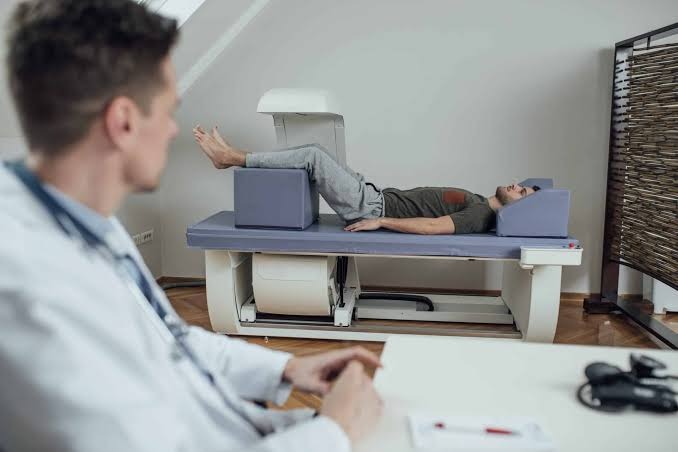
A DEXA scan (dual-energy X-ray absorptiometry) is a low-radiation imaging test that measures bone density and body composition, including fat mass, lean muscle mass, and where fat is distributed across your body. It’s considered one of the most accurate, non-invasive ways to get a detailed breakdown of what your body is actually made of, rather than relying on weight or BMI alone.
Originally developed to diagnose osteoporosis, DEXA scans are now widely used by athletes, people on fitness or weight-loss programs, and anyone who wants a more precise picture of body fat than a bathroom scale or a tape measure can provide. If you’re specifically curious about the bone-density side of DEXA, how the exam works, and how to read a T-score, our full breakdown of the bone density test covers that in more depth.
How Much Does a DEXA Scan Cost for Body Fat?
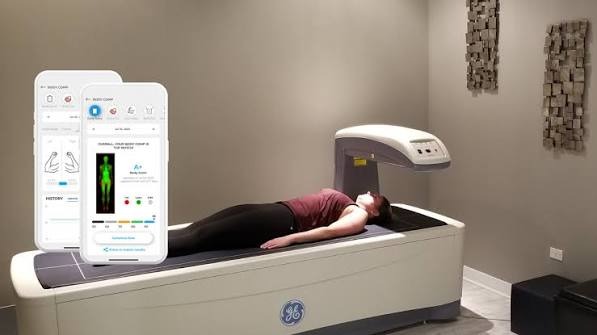
DEXA scan pricing for body composition varies depending on the facility, your location, and whether the scan is billed through insurance or paid out of pocket. As a general example, body composition DEXA scans in the U.S. are often priced somewhere in the range of a modest specialty fitness service, think in the ballpark of what you’d pay for a personal training session or a lab panel, rather than a major medical procedure.
A few things that typically affect the price:
- Purpose of the scan — a body-composition-only scan is usually priced differently than a full bone-density DEXA scan ordered for medical reasons.
- Insurance coverage — bone density DEXA scan is often covered when medically necessary (for example, for osteoporosis screening), while body-composition scans for fitness or wellness purposes are typically an out-of-pocket, self-pay service.
- Location and facility type — pricing can differ between hospital imaging departments, standalone imaging centers, and gym-based DEXA machines.
- Package deals — some centers offer discounted rates for multiple scans booked in advance, which is useful if you’re tracking body composition changes over several months.
The best way to get an exact number is to call your local imaging center directly and ask for their current self-pay rate for a body composition DEXA scan, since pricing structures change and vary by provider.
Does a DEXA Scan Show Body Fat?
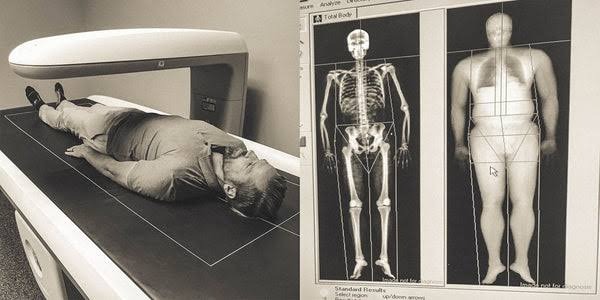
Yes, a DEXA scan is one of the most detailed ways to measure body fat available outside of a research lab. It doesn’t just give you a single body fat percentage; it breaks results down by region, so you can see fat and lean mass separately in your arms, legs, and trunk.
A typical DEXA body composition report includes:
- Total body fat percentage
- Fat mass vs. lean (muscle) mass, in pounds or kilograms
- Regional breakdown — how fat and muscle are distributed across arms, legs, and trunk
- Visceral fat estimate — the fat surrounding internal organs, which is more closely linked to metabolic health risk than fat stored elsewhere
- Bone mineral density, since the same scan can assess bone health at the same time
This level of detail is part of why DEXA is often considered a step above other body composition methods like skinfold calipers, bioelectrical impedance scales, or hydrostatic weighing; it’s less dependent on hydration levels and user technique, which can throw off results from at-home methods. If bone health is part of what brought you here too, it’s worth reading what counts as a good DEXA scan score, since the same appointment often covers both bone density and body composition.
Where Can I Find the Closest DEXA Scan Near Me?
The quickest way to find a DEXA scan near you is to search for imaging centers, sports medicine clinics, or specialty fitness labs in your area that specifically list “DEXA body composition” as a service. Not every imaging center offers the body-composition version, even if they do bone-density scans.
A few places that commonly offer DEXA scans:
- Hospital and outpatient imaging departments—typically focused on bone density, though some also offer body composition scans.
- Standalone diagnostic imaging centers—often have more flexible self-pay pricing for body composition scans.
- Sports performance labs and university exercise science departments — frequently offer DEXA scans to athletes and the general public.
- Specialty fitness and wellness studios — increasingly common in larger metro areas, often marketed toward people tracking fitness progress.
If you’re specifically looking for body composition (not just bone density), it’s worth calling ahead to confirm the location has that service, since not all DEXA machines are configured or staffed the same way.
Where Can I Get a DEXA Scan in NJ?
New Jersey has a growing number of imaging centers and specialty labs offering DEXA body composition scans, particularly in the northern part of the state near major population centers. If you’re searching for where to get a DEXA scan in NJ, here are a few practical tips:
- Search near transit-accessible hubs. Areas like Jersey City, Hoboken, and Newark tend to have more imaging and diagnostic centers, simply due to population density.
- Check for body-composition-specific scans. Some NJ imaging centers focus primarily on bone density for osteoporosis screening and may not advertise the body-fat version always ask directly.
- Ask about walk-in vs. appointment-only scheduling, since this varies a lot by facility.
Jersey City Imaging Center is one option for residents in the Jersey City area looking for a DEXA scan without traveling into Manhattan or further south in the state, offering both bone density and body composition scanning in the same visit. As with any provider, it’s worth calling ahead to confirm current availability and pricing for the specific type of scan you need.
What Should You Expect During a DEXA Scan?
A DEXA scan is quick, painless, and requires no special preparation beyond a few simple guidelines. Here’s what a typical appointment looks like:
- Check-in and brief questionnaire. You’ll answer basic questions about recent X-rays, pregnancy status (if applicable), and any metal implants.
- Change into light clothing. Most centers ask you to remove metal objects, jewelry, belts, and underwire bras since metal can interfere with the scan.
- Lie flat on the scanning table. You’ll lie still on your back for the duration of the scan.
- The scanner arm passes over your body. A low-dose X-ray arm moves slowly over you, usually taking between 5 and 15 minutes total, depending on whether it’s a full-body or targeted scan.
- No recovery time needed. There’s no sedation, no contrast dye, and no downtime you can resume normal activities immediately afterward.
- Results and report. Most centers provide a printed or digital report within a few days, sometimes same-day, showing your body fat percentage, lean mass, and regional breakdown.
For a closer, step-by-step look at what happens during the bone-density portion of the scan, specifically including how spine and hip positioning works, see how a DXA scan works.
Is a DEXA Scan Safe?
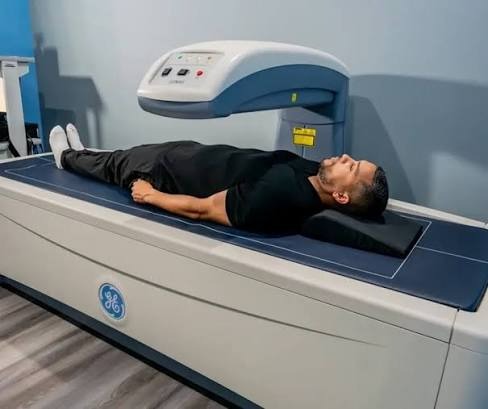
Yes. The radiation dose from a DEXA scan is very low, significantly lower than a standard chest X-ray, which is part of why it’s considered safe for repeat testing every few months to track changes over time.
Key Takeaways
- A DEXA scan measures body fat, lean mass, bone density, and fat distribution with more precision than most at-home methods.
- Cost for a body-composition DEXA scan varies by location and provider; calling ahead for current self-pay pricing is the most reliable way to get an exact number.
- New Jersey residents, including those near Jersey City, have several options for both bone-density and body-composition DEXA scans.
- The scan itself takes about 5 to 15 minutes, involves no prep beyond removing metal objects, and has no downtime afterward.
- If you’re specifically looking for body fat results rather than bone density, confirm the facility offers that scan type before booking.
If you’re in the Jersey City area and want to know more about scheduling a DEXA scan, Jersey City Imaging Center can walk you through current appointment availability and what to expect for your specific scan type, whether that’s body composition, bone density, or both in the same visit.
How Often Should You Get a DEXA Scan?
For people tracking body composition changes related to fitness or weight-loss goals, DEXA scans every 3 to 6 months are common, since that timeframe usually allows for meaningful, measurable change without excessive radiation exposure or unnecessary cost. For bone density monitoring, especially for osteoporosis risk, your physician will typically recommend a schedule based on your age, risk factors, and prior results often every one to two years. If you’re due for a scan, Schedule Your DEXA Scan Today to keep track of your progress and support informed health decisions.
Frequently Asked Questions
Do I need a doctor’s referral to get a DEXA scan?
For body-composition scans done for fitness or wellness purposes, most centers don’t require a referral, and you can book directly as a self-pay patient. Medical bone-density DEXA scans, particularly those billed to insurance, typically do require a physician’s order.
How accurate is a DEXA scan for body fat compared to other methods?
DEXA is generally considered more accurate and more consistent than bioelectrical impedance scales or skinfold calipers, largely because it isn’t affected by hydration levels or the skill of the person taking the measurement.
Can I eat before a DEXA scan?
Most centers recommend avoiding large meals right before a scan and skipping calcium supplements for at least 24 hours if a bone density component is included, but light eating and normal hydration generally don’t significantly affect a body composition scan.
How long does it take to get DEXA scan results?
Many centers provide a printed report immediately after the scan or within a few business days, depending on whether a technician or radiologist needs to review and finalize the results.
Medical Disclaimer
The information provided in this article is for educational and informational purposes only. It is not intended to replace professional medical advice, diagnosis, or treatment. Always consult your physician or another qualified healthcare provider regarding your health concerns. If you are experiencing a medical emergency, call 911 or visit your nearest emergency department immediately.
Need Diagnostic Imaging?
Schedule your MRI, CT Scan, X-Ray, Ultrasound, or other diagnostic imaging services with Jersey City Imaging Center. Our experienced team provides advanced technology, fast appointments, and compassionate care.

